- jeffchen@packagedbox.com
- +86-15767637578
- Language
 English
 Español
 Português
 русский
 Français
 日本語
 Deutsch
 tiếng Việt
 Italiano
 Nederlands
 ภาษาไทย
 Polski
 한국어
 Svenska
 magyar
 Malay
 বাংলা ভাষার
 Dansk
 Suomi
 हिन्दी
 Pilipino
 Türkçe
 Gaeilge
 العربية
 Indonesia
 Norsk
 تمل
 český
 ελληνικά
 український
 Javanese
 فارسی
 தமிழ்
 తెలుగు
 नेपाली
 Burmese
 български
 ລາວ
 Latine
 Қазақша
 Euskal
 Azərbaycan
 Slovenský jazyk
 Македонски
 Lietuvos
 Eesti Keel
 Română
 Slovenski

Video Brochure Card Battery Life: How Long Does It Actually Last
1. Typical Battery Specs
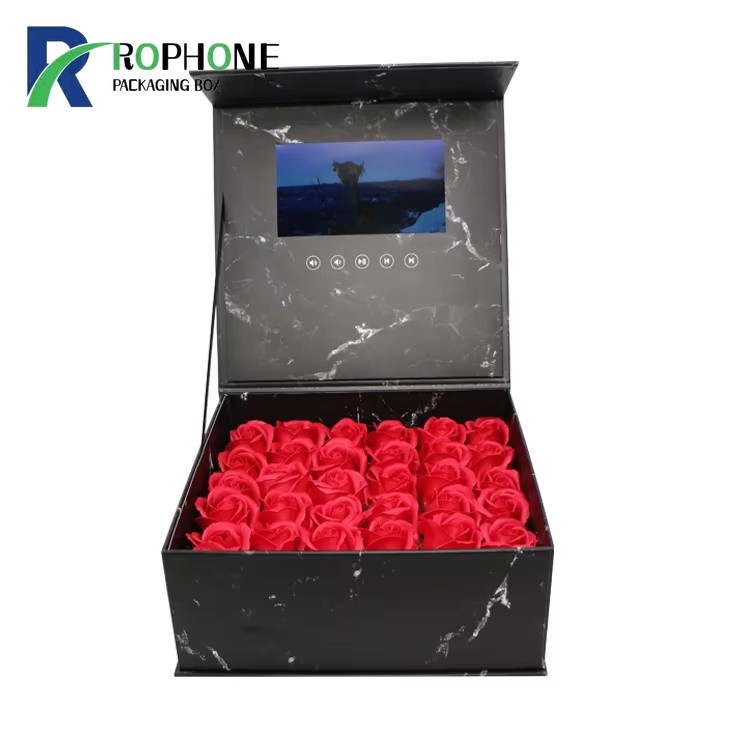
A standard video brochure card uses a 200mAh to 500mAh lithium-polymer battery. A fully charged 300mAh battery delivers 60 to 90 minutes of continuous video playback. Standby time, with the card closed and not playing, ranges from 3 to 6 months. These numbers are based on a 4.3-inch screen at default brightness playing a standard MP4 file.
2. Factors That Affect Playback Time
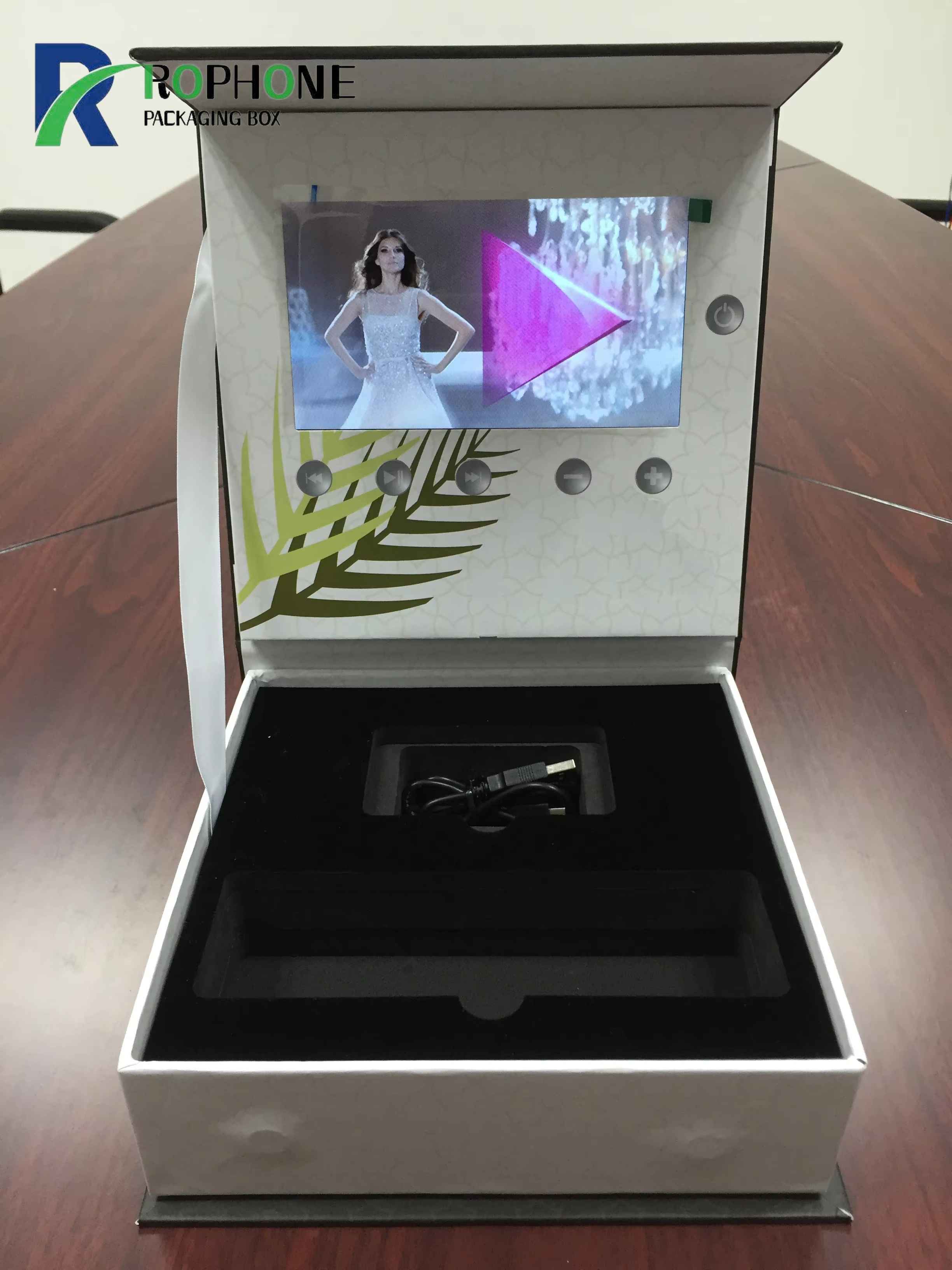
Screen size is the biggest factor. A 7-inch screen draws more power than a 2.4-inch one. Brightness level, video resolution and volume also matter. Playing at full brightness and max volume can cut playback time by 30%. Rophone tests each card at medium brightness and 50% volume, which matches real-world use.
3. Charging Time and USB Power
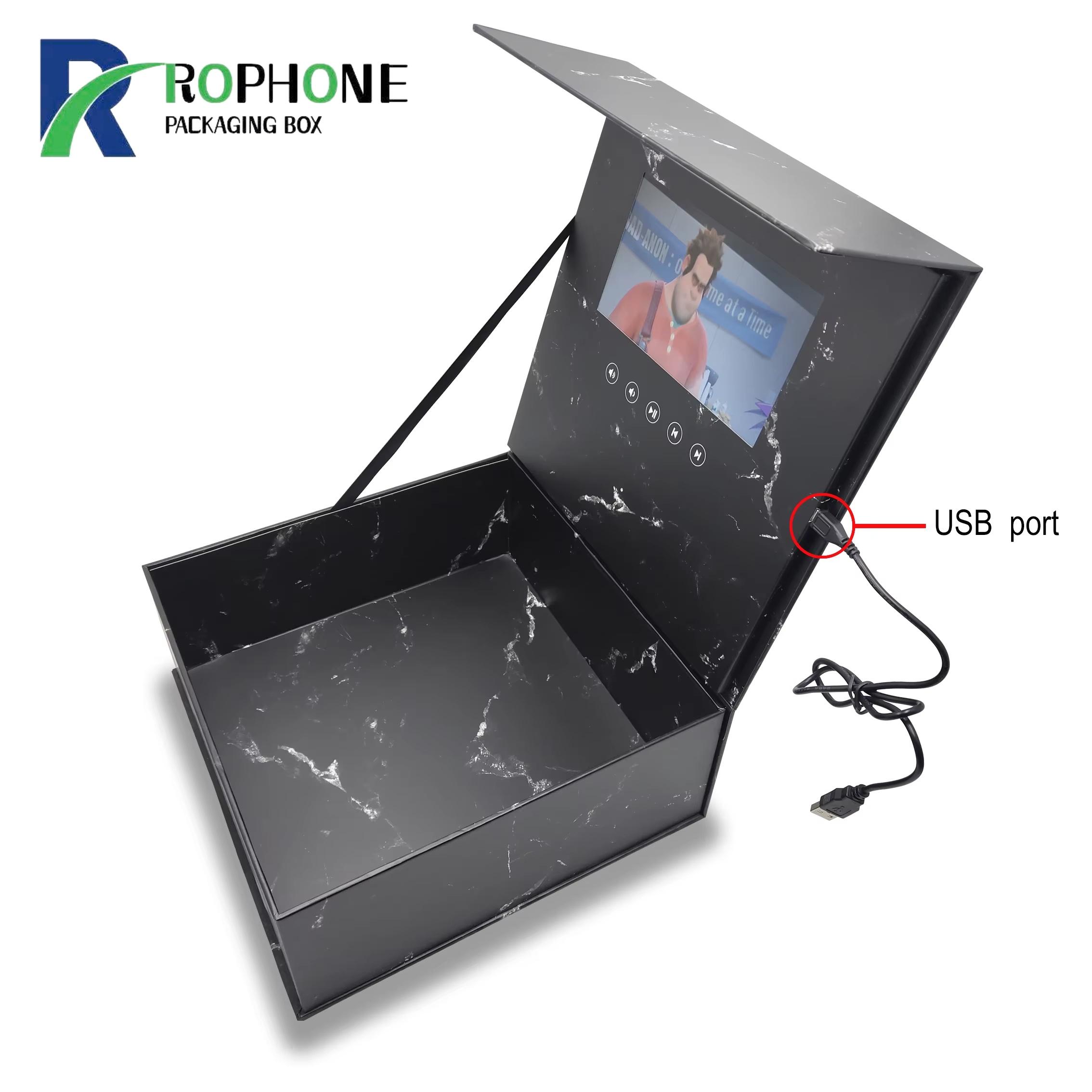
Most cards fully charge in 1.5 to 2 hours from a standard USB 2.0 port. Charging from a computer USB port is slow but reliable. Using a 5V/1A wall charger speeds things up. Avoid fast chargers above 5V; they can damage the charging circuit. The USB port handles both charging and video file transfer.
4. Storage and Shelf Life
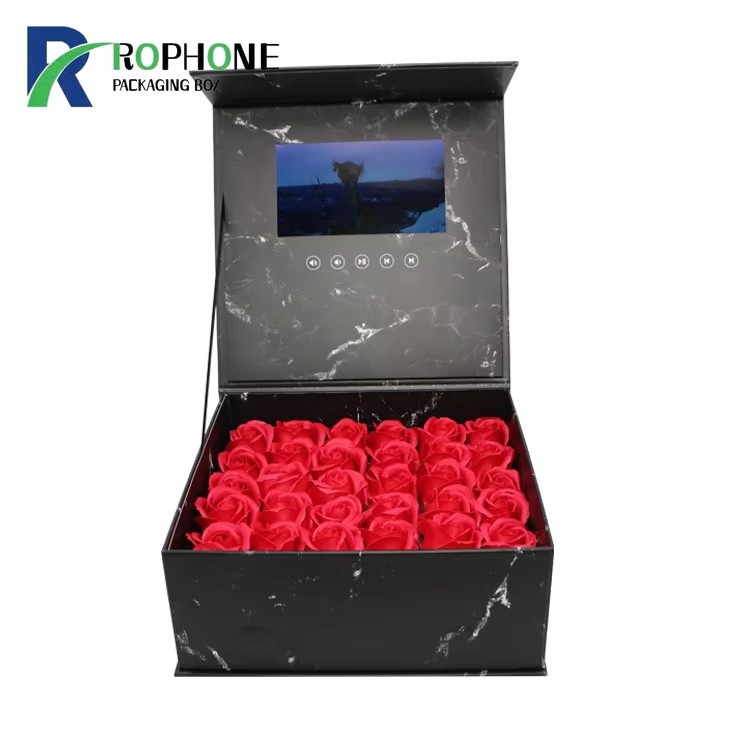
Cards shipped in bulk sit in a warehouse or on a shelf before use. A charged card retains about 5% of its battery per month in standby. After 6 months in storage, it will need a recharge before distribution. For long-term campaigns, plan to recharge cards 1 to 2 weeks before mailing. Rophone ships cards at 80% charge, ready for immediate use.
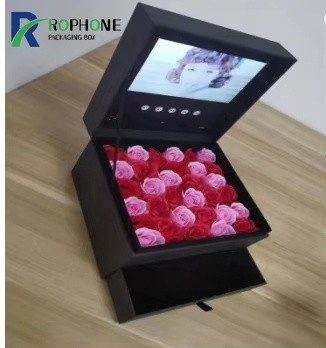
5. Testing Battery Before Bulk Mailing
Before sending cards to prospects, open a random sample and let the video run. Check for playback time, screen brightness and audio quality. If any card dies early, the whole batch may need recharging. Rophone includes a battery test report with every bulk order, so you know exactly what to expect.
6. Ordering Cards with Confidence
When ordering video cards, ask the supplier for battery test results, sample playback time and warranty terms. Rophone provides all three with every bulk order. We also offer custom battery capacity for clients who need longer playback for extended video content. Contact us to discuss your project and get a sample card tested to your video specifications.
Send Inquiry
-
WhatsApp
X
We use cookies to offer you a better browsing experience, analyze site traffic and personalize content. By using this site, you agree to our use of cookies.
Privacy Policy