- jeffchen@packagedbox.com
- +86-15767637578
- Language
 English
 Español
 Português
 русский
 Français
 日本語
 Deutsch
 tiếng Việt
 Italiano
 Nederlands
 ภาษาไทย
 Polski
 한국어
 Svenska
 magyar
 Malay
 বাংলা ভাষার
 Dansk
 Suomi
 हिन्दी
 Pilipino
 Türkçe
 Gaeilge
 العربية
 Indonesia
 Norsk
 تمل
 český
 ελληνικά
 український
 Javanese
 فارسی
 தமிழ்
 తెలుగు
 नेपाली
 Burmese
 български
 ລາວ
 Latine
 Қазақша
 Euskal
 Azərbaycan
 Slovenský jazyk
 Македонски
 Lietuvos
 Eesti Keel
 Română
 Slovenski
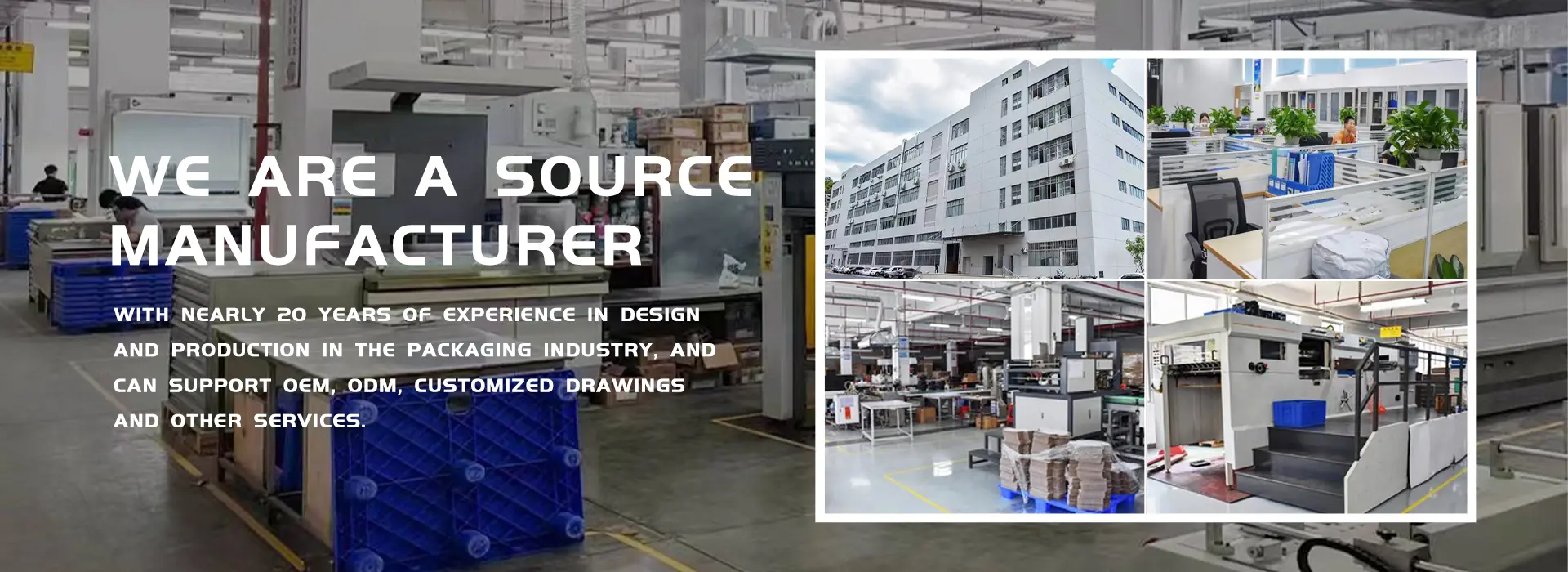
Memory Storage on a Rechargeable LCD Greeting Card: Video Capacity and Playback Time Explained
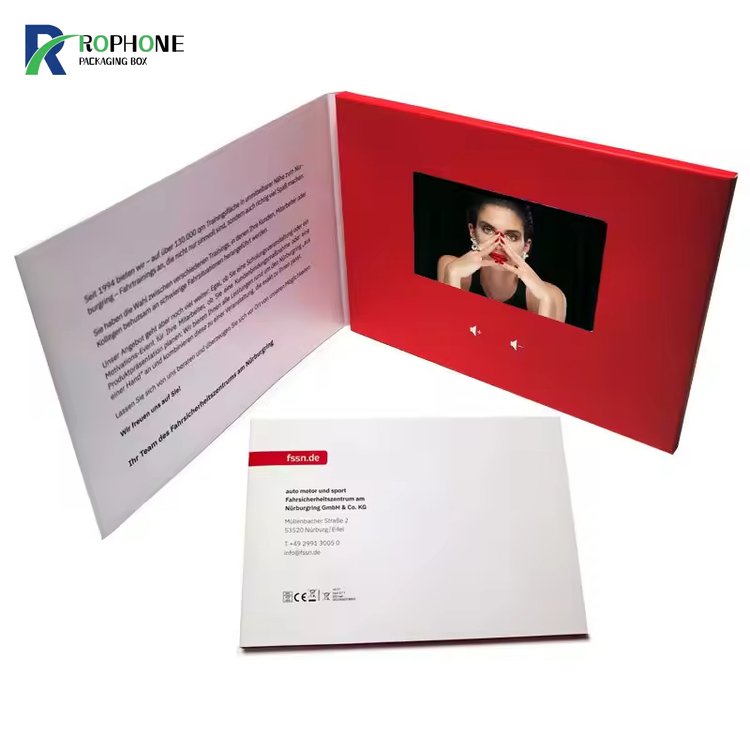
The memory storage inside a rechargeable LCD greeting card determines how long your video can be and how smoothly it plays. Too little memory forces a heavily compressed file that looks soft, while the right capacity keeps the video clear and easy to load. At Rophone, every rechargeable LCD greeting card is fitted with internal flash memory sized to match your video length and quality. In this article, we explain how memory storage works on a rechargeable LCD greeting card, the common capacity options and how to estimate the video your card can hold.
1. How Internal Memory Stores the Video on a Rechargeable LCD Greeting Card
A rechargeable LCD greeting card does not rely on an SD card or external storage. The video MP4 file is written directly into the built-in flash memory on the playback PCB. When the card opens, the playback chip reads the file from this memory and sends it to the LCD screen and speaker. Because the memory is internal, there are no moving parts, no removable cards and nothing a recipient can lose or replace. The sealed design also keeps the video secure between shipments.
The internal memory is non-volatile, meaning it keeps the video even when the battery runs flat. Recharging the card only restores playback power; it does not erase the stored video. This makes a rechargeable LCD greeting card reliable for long campaigns where cards may sit in storage for weeks before being opened.
2. Common Memory Capacity Options
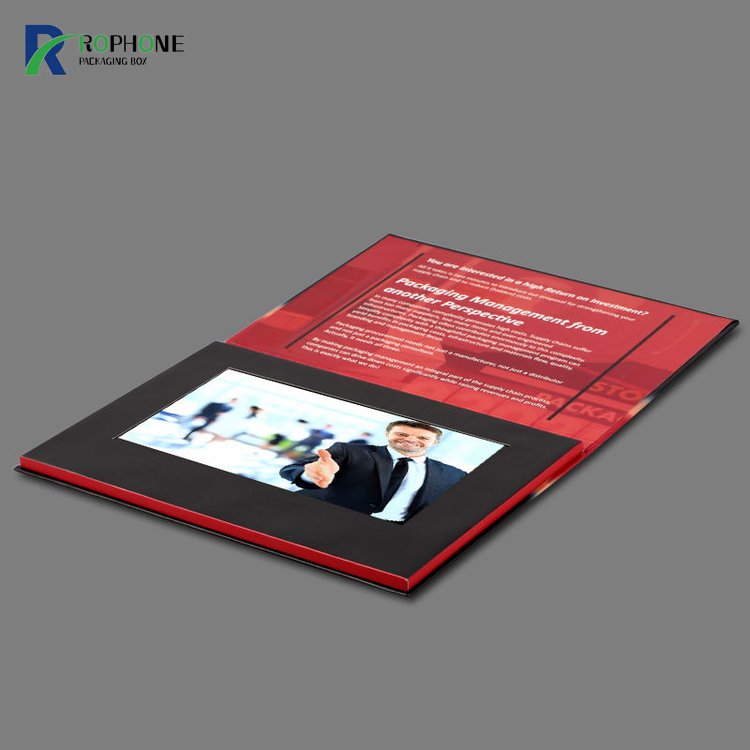
Rophone offers several memory capacities for a rechargeable LCD greeting card, commonly 128MB, 256MB, 512MB and 1GB. Smaller capacities suit short 10 to 30 second clips, while larger capacities hold longer videos or higher-resolution footage. The capacity is chosen during sampling based on your video length, resolution and frame rate. Most standard corporate and greeting rechargeable LCD greeting card orders use 256MB or 512MB.
Choosing the right capacity avoids two common problems: an undersized memory that forces heavy compression and blurry video, and an oversized memory that raises cost without visible benefit. Our team reviews your final MP4 file and recommends the smallest capacity that still keeps the video clear. You can compare specifications on our rechargeable lcd greeting card product page.
3. Estimating Video Length and File Size
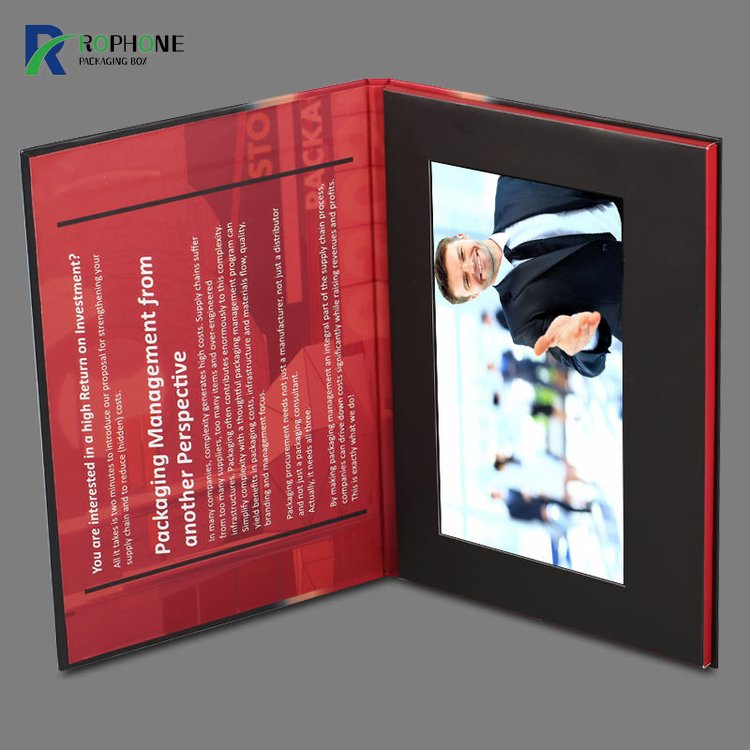
The video length a rechargeable LCD greeting card can hold depends on both memory size and compression. A typical MP4 encoded at moderate bitrate uses roughly 1 to 2MB per second. As a rough guide, 256MB holds about 2 to 4 minutes of standard-definition video, and 512MB holds about 4 to 8 minutes. A 1GB card can store longer or higher-resolution footage. These are estimates; the exact figure depends on your video resolution, bitrate and audio track.
Rophone checks your file before production and confirms it fits the selected memory with headroom left over. If your video is too long for the chosen capacity, we advise trimming the clip or upgrading the memory rather than over-compressing. Browse our full electronic greeting card range for other playback options.
4. Supported Video and Audio Formats
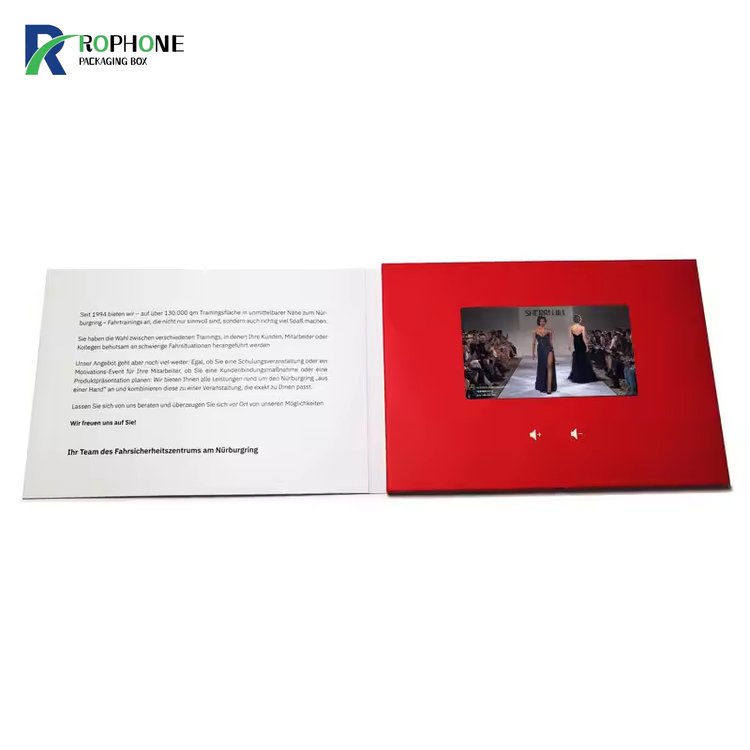
The playback chip on a rechargeable LCD greeting card supports standard MP4 video with AAC audio, which is the most compatible format for these modules. Resolution should match the screen panel, and the file should use H.264 encoding for stable playback. Very high bitrate or unusual codec files may not play correctly, so we recommend delivering a compressed, web-ready MP4. Our team can transcode or compress your footage to a compatible format before loading it onto the card.
Once the video is loaded into memory, it plays automatically when the card opens. Most modules play the clip once and stop, or loop continuously depending on the setting you choose. Rophone confirms the playback mode and video file during the sample stage so the final rechargeable LCD greeting card behaves exactly as intended.
5. Memory Reliability and Pre-Loading in Production
Memory quality matters for reliable playback. Rophone uses tested flash memory that retains data through temperature changes and repeated use. During QC, every rechargeable LCD greeting card plays the full stored video from start to finish to confirm there are no freezes, skipped frames or audio gaps. Cards that show read errors or corrupted files are pulled from the batch.
For bulk orders, videos are pre-loaded into memory at the factory, so each card ships ready to open. If you later need to update a video, the same USB data link can rewrite the file. Contact Rophone with your video length and target screen size, and we will recommend the right memory for your custom rechargeable LCD greeting card.
6. Reusing the Card and Updating Stored Video
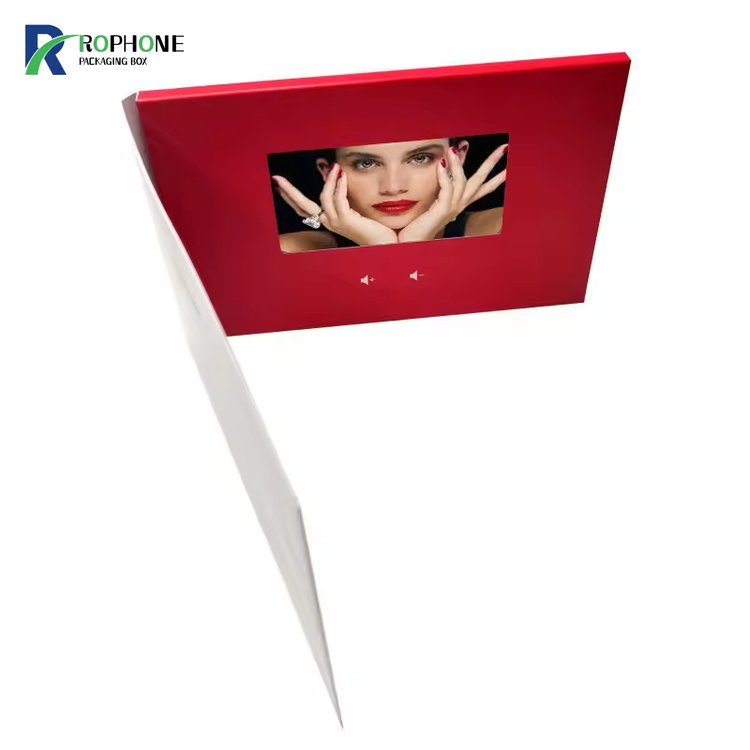
Because the rechargeable LCD greeting card uses internal flash memory and a rechargeable battery, it can be reused or updated after the first campaign. When the stored video needs to change, the USB data link lets a new MP4 file overwrite the old one, so the same card can carry different messaging for a follow-up event. This makes a rechargeable LCD greeting card a reusable marketing tool rather than a one-time print piece.
For buyers planning repeated campaigns, Rophone can advise on a memory size that leaves room for future video updates. We also explain how many times the video can be reloaded, how long the battery and memory hold up, and which module settings support repeat playback. With proper handling, a well-built rechargeable LCD greeting card remains playable across multiple uses. Contact our team to discuss storage and reuse options for your project.
Send Inquiry
-
WhatsApp
X
We use cookies to offer you a better browsing experience, analyze site traffic and personalize content. By using this site, you agree to our use of cookies.
Privacy Policy